Text
Boy
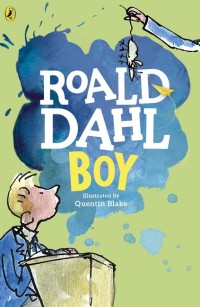
"Boy: Tales of Childhood" is an autobiographical book by Roald Dahl that provides a vivid and humorous account of his early years, spanning from his birth in 1916 to his experiences at boarding school. The book is structured as a series of anecdotes, each capturing a particular moment or aspect of Dahl's childhood.
Early Childhood and Family Life
Birth and Family Background: Roald Dahl was born on September 13, 1916, in Llandaff, Wales. His parents were Norwegian immigrants, and Dahl grew up in a close-knit family with a strong Norwegian heritage. His father, Harald Dahl, was a successful shipbroker who tragically died when Roald was three years old, shortly after the death of his sister, Astri. Despite these early losses, Dahl's mother, Sofie Magdalene Dahl, remained a central and supportive figure in his life.
The Great Mouse Plot of 1924: One of the most memorable stories from Dahl's early years is the "Great Mouse Plot of 1924." At the age of eight, Dahl and his friends placed a dead mouse in a jar of gobstoppers at the sweet shop of a mean old woman named Mrs. Pratchett. This prank resulted in severe punishment at school but remains a testament to Dahl's mischievous nature and his early sense of rebellion against authority.
School Days
Llandaff Cathedral School: Dahl's first school experience at Llandaff Cathedral School was marked by harsh discipline and corporal punishment. He recounts the brutal beatings administered by the headmaster and the general atmosphere of fear and repression. Despite these challenges, Dahl found solace in his family and their annual summer trips to Norway, which he fondly remembers.
St. Peter's Boarding School: At the age of nine, Dahl was sent to St. Peter's, a boarding school in Weston-super-Mare. His experiences here were mixed. While he enjoyed some aspects of school life, such as playing sports and making friends, he also endured homesickness, strict discipline, and cruel treatment from older boys and certain teachers. One particularly harrowing episode involved a severe bout of appendicitis that was initially dismissed by the school nurse, leading to an emergency operation.
Repton and Shell: Dahl's next school was Repton, a prestigious public school in Derbyshire. Repton offered a more stimulating intellectual environment, but the harsh discipline and bullying by older students continued. One unique aspect of Repton was the school's association with Cadbury's, the famous chocolate manufacturer. Cadbury's would send boxes of new chocolates to the school for testing, sparking Dahl's imagination and later inspiring his beloved children's book, "Charlie and the Chocolate Factory."
Family Holidays and Norwegian Heritage
Norwegian Holidays: A recurring theme in "Boy" is the annual family holidays to Norway. These trips were a source of great joy and adventure for young Roald. He describes the idyllic summer vacations spent fishing, swimming, and exploring the Norwegian countryside with his family. These experiences left a lasting impression on Dahl and contributed to his deep affection for his Norwegian heritage.
Formative Experiences and Influence on Writing
Inspiration for Future Stories: Throughout the book, Dahl reflects on how many of his childhood experiences and observations influenced his later writing. The harsh discipline at school, the pranks and adventures, and the colorful characters he encountered all found their way into his stories. The anecdotes in "Boy" offer readers a glimpse into the origins of some of the themes and elements that would become hallmarks of Dahl's literary work.
Conclusion
"Boy: Tales of Childhood" is more than just an autobiography; it is a celebration of the joys and challenges of childhood. Through his engaging storytelling and sharp wit, Roald Dahl brings to life the experiences that shaped him as a person and a writer. The book is a testament to the resilience of the human spirit and the enduring power of imagination, providing readers with a deeper understanding of one of the most beloved authors of children's literature.
Availability
| 02479 | 921 DAH b | Library | Available |
Detail Information
- Series Title
-
-
- Call Number
-
921 DAH b
- Publisher
- : Puffin books., 2016
- Collation
-
256 pages
- Language
-
English
- ISBN/ISSN
-
9780141365534
- Classification
-
921
- Content Type
-
-
- Media Type
-
-
- Carrier Type
-
-
- Edition
-
-
- Subject(s)
- Specific Detail Info
-
-
- Statement of Responsibility
-
-
Other version/related
No other version available
File Attachment
Comments
You must be logged in to post a comment
 Computer Science, Information & General Works
  Philosophy & Psychology
  Religion
  Social Sciences
  Language
  Pure Science
  Applied Sciences
  Art & Recreation
  Literature
  History & Geography